

Why are so many AI companies, arguably employing some of the smartest people, so utterly bad at marketing? Their messaging is often worse than the headline of this post, relying on brags and qualifiers that they cannot back up. I've collected a few examples, and make some suggestions on how to create a more differentiated message.
First, let's take a moment to recognize that video analytics, in some form or another, have been a thing in the security industry for over 2 decades now. Literally 100's of companies have come along (and many, disappeared in defeat) over the years. AI-based systems, using deep learning techniques, have been shipping for over a decade, and while they made vast improvements overall, have still failed to deliver video analytics systems that are fully point-and-shoot easy to setup, and functional enough to add value to the point where they are valuable on any common scene.
When we consider how long video analytics has been around, and how many vendors there are when you count them all, the odds that any given company is making the "best", the "only", or the "first" anything are extremely small. Yet these are to go-to adjectives used almost by default by many analytics companies, particularly start-ups.
These are just a few examples I grabbed from ISC West exhibits:


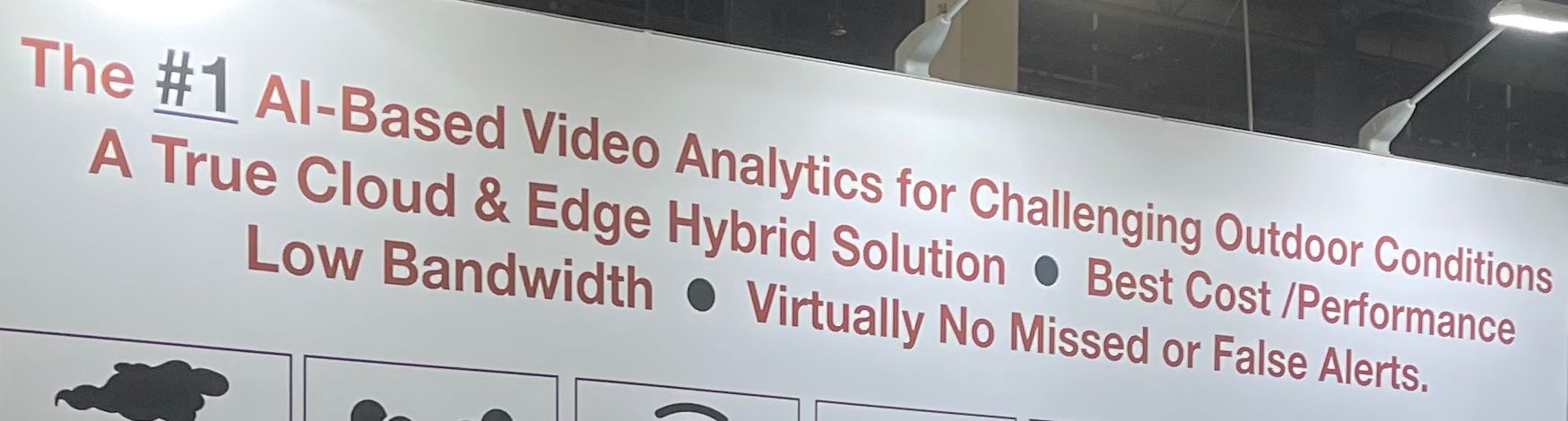
Odds are you could not name any of these companies off-hand, or if you were asked to name the "best" tailgating detector, or the "best" LPR product your answers would not match up to the companies making these statements.
Elitism claims are not setting your product apart, they are burying you in the buyers mind, relegating you to a stack of companies that they have already heard these claims from, and dismissed for whatever reason.
At a bare minimum, if an AI company in the security industry is not doing at least $30M in annual software sales, they are not a best/leading/#1 in any real category.
A little less frequently used, but still overly common in analytics (and many other categories) is "award-winning":
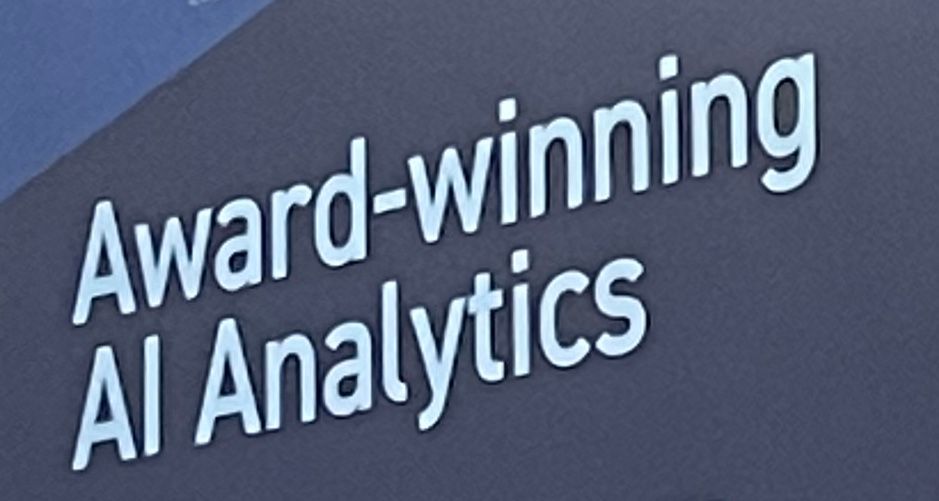
With so many award categories these statements say nothing. Anyone who has been in the security industry for more than a short period of time has likely already realized that many times these awards are closely linked to advertising dollars, or are given out based on superficial conversations or demonstrations instead of real-world testing and analysis. If you are an AI company desperate to have your own award, please email me and I will create a special Pelican Zero award for you, available for a small fee, and you too can then claim to be an award-winning product.
Next are the statements that set up false expectations and more often than not confuse and frustrate integrators and users when real life does not match up with the marketing claims.
The Best in class LPR product cited above also works on "any hardware".
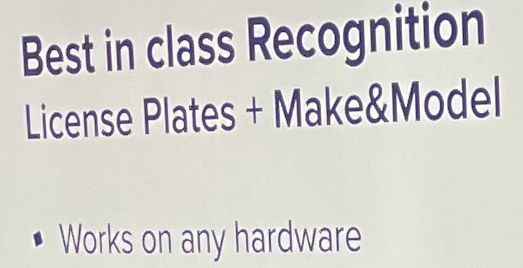
I look forward to deploying this on an old Raspberry Pi I have laying around with a D-Link IP camera from 2004. This is certainly not the only example of an "any hardware" or "any camera" type of claim, it is terminology frequently overused.
For many users video analytics became almost synonymous with false alarms, so we see analytics companies attempting to alleviate user fears:


Companies claiming even more insane numbers like 99% are not unheard of either.
These numbers are nearly impossible to measure, which makes even a manageable number of false alarms seem excessive when users were led to believe that THIS product was going to be the one to finally solve all of their problems. Because of the challenges in measuring actual in-field performance, these claims will more frequently set the manufacturer and integrator up for service calls and debriefs with frustrated users more than they will help to close new business.
What makes this kind of brags-and-stats style marketing even more illogical is that if any of these claims were accurate, users would be hearing about these companies via worth of mouth or other channels. The security industry is relatively small, and many integrators and end users are sharing information in online forums, regional groups/meetups, chat groups and so forth. If your analytics company is truly stand out, the market will tell you.
While nobody sets out to buy the Worst product, the Most Unreliable, or the Last In It's Class, most users also are not specifically looking for the Best or #1 either. When it comes to analytics, what users most often want is the one that offeres the best value for their specific needs, and those needs and requirements can vary widely from user to user. Thus, it is near impossible for any single product to be a stand out best or #1 broadly speaking. As an example, one user may be highly concerned about LPR accuracy for plates to create access lists and block lists for entrances to a secure facility, where the plate is acting as a credential. This user might care most about the overall speed, accuracy, and reliability of the LPR product. Another user may want to collect LPR data, but is doing so as part of a larger initiative, where the LPR data is going to be integrated into other software. In this case, the user might care more about APIs and ease of integration, available data formats, and similar things that relate more to its ability to integrate instead of absolute performance numbers.
How then does an analytics company differentiate themselves? Tailor your messaging to something the user or buyer is more likely to relate to. This will often depend on the use cases the product is targeted far, a central-monitoring oriented platform is likely going to have far different messaging than a forensic search offering.
In my experience analytics buyers have the following fears or concerns top of mind when evaluating and selecting products:
Can my operators actually use this software
Will this product save me meaningful time and money
How likely am I to get fired for picking this product
We can touch on each of these points briefly. The first item, ability for operators to become proficient with the software, is very frequently overlooked by analytics companies. While the product buyers and evaluators may be more experienced, and more technical, the average user of video surveillance software is frequently someone who falls more into an hourly wage job-not-a-career type of position. High turnover is an issue, as is time required to get new employees sufficiently up to speed. If the analytics product is not intuitive throughout its feature set, easy to learn, and reliable, odds are the operators will not use it to its full capacity, or at all. Deep functionality and granular options are nice when your users are likely to be highly skilled operators, but that is less common.
Saving time and money may actually be the top criteria in the final selection stage. These products are almost always used to reduce hours spent on a task, such as forensic investigations, or to make operators more efficient in monitoring large numbers of cameras without missing key events. While ROI on a camera or VMS can be hard to measure, analytics ROI is very easy to measure, if the product does not save enough time or improve efficiency enough to offset its costs, it will have little ultimate value to the user.
The third bullet point is really a summation of the first two, and is often a trust element. Even when the user does some kind of shootout or proof of concept test, they rarely ever truly know how it will work in their production environment. Analytics companies that try to swoop into the market making lofty claims can cause concerns that they might not have the maturity and longevity that buyers see as a sign of stability. Track records are more often measured by tenure than by logos. Almost every company has knocked down a few big accounts in some fashion (or more likely a single franchise or small location of a big company), but very few have a multi-year track record of success and incremental improvements. Knowing that your analytics provider is staffed and able to support you post-sale, when the real issues come out, makes a big difference for many buyers. Until an analytics company has proven that it has staying power, investing in the success of your customers (both integrators and end users) is potentially one of the best ways to earn a high reputation score within the security industry, which will lead to more word of mouth referrals and organic growth. Additionally, a well-implemented "#5" ranked analytics software will more likely be perceived as the Best In Class than a self-ranked #1 platform with minimal post-sales support that leaves the user with unmet expectations.
Not every analytics company is a complete failure at marketing, some are using realtable or realistic messaging to get their point across.
Lumeo's No-Code custom analytics targets a request I often heard over the years from users who wanted analytics with a degree of flexibility or customization that they could not find from standard offerings.

Here is an example of a banner I saw at ISC West that gets the messaging mostly right:
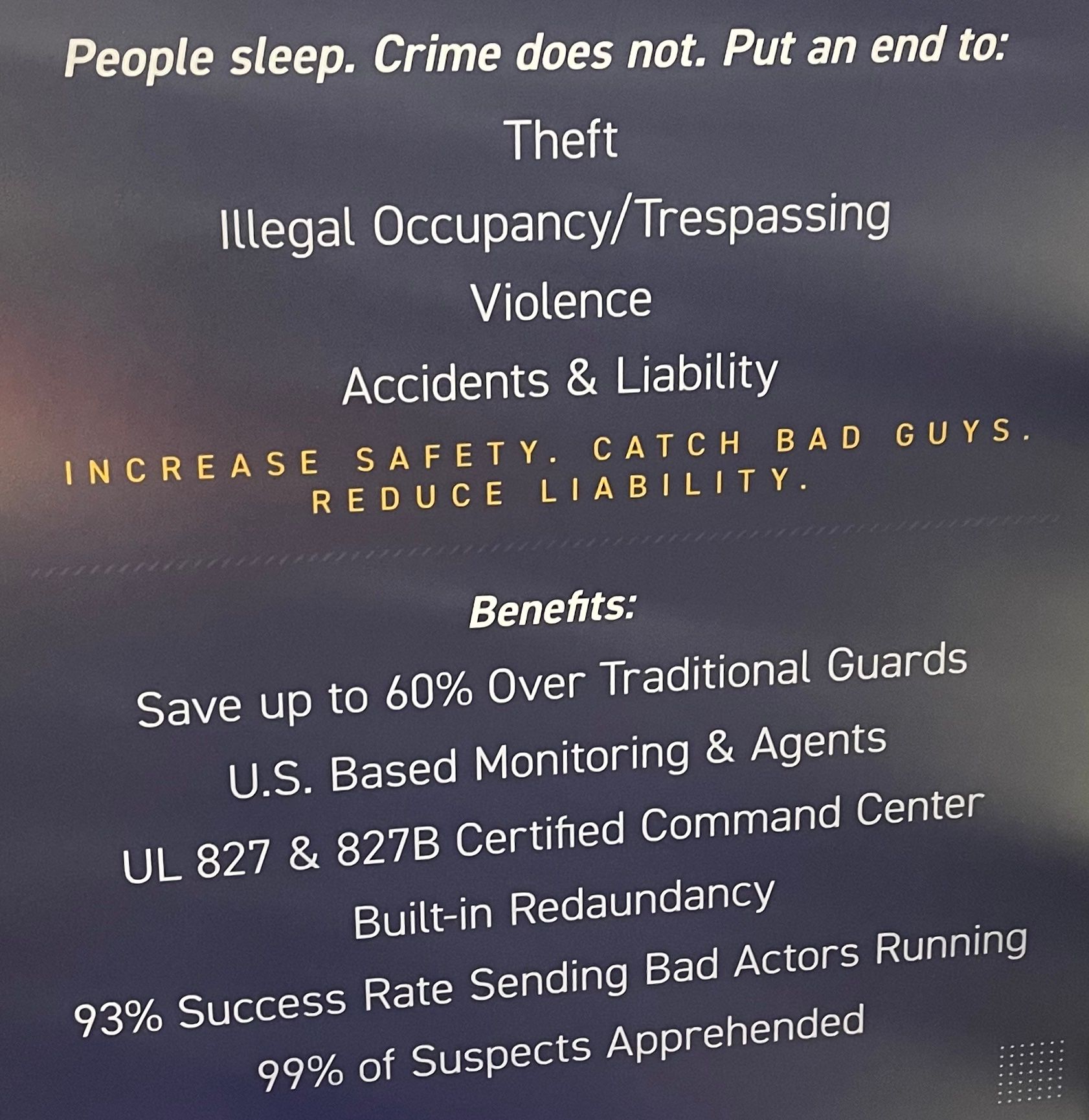
This product was targeted to remote monitoring applications. They lead with some common applications and outcomes. The cost savings benefit is listed right up front in that section, along with some other criteria that buyers of these kinds of analytics are likely to key in on. The 93% success rate and 99% apprehension rate feel a bit overstated, but since they are not leading with these things they are less of a concern. The primary issue with this banner is the "Redaundancy" typo, kind of like a resume featuring a promient typo, but I would guess few people even caught that. Overall this one had statements that were tailored to the audience and answered some common questions, which helps filter out people looking for a different solution and gives people who do want to engage with a company a basic premise before starting a sales conversation.
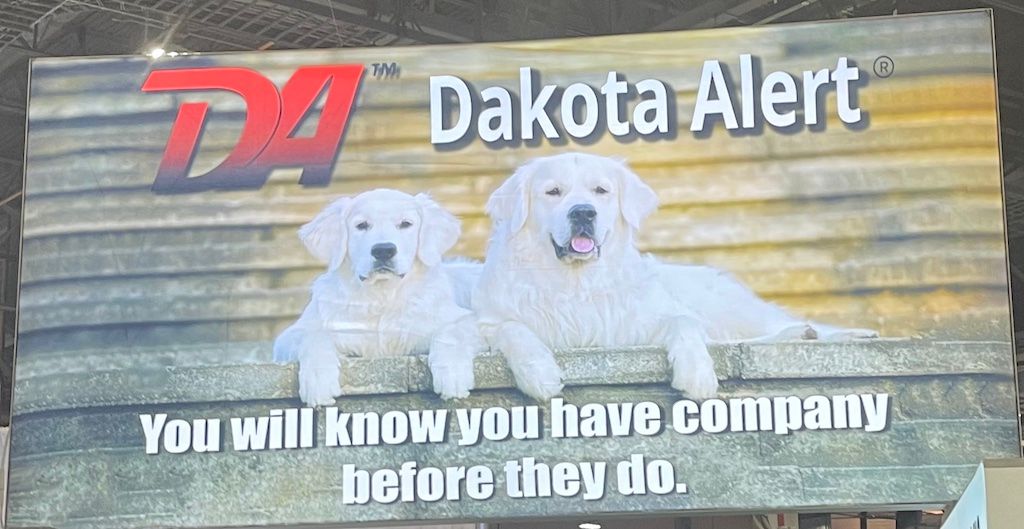
This Dakota Alert sign was also good. Even if you are not familiar with the product the dogs and the tagline give you the general idea that this product is likely going to be some kind of early-warning visitor alert system.
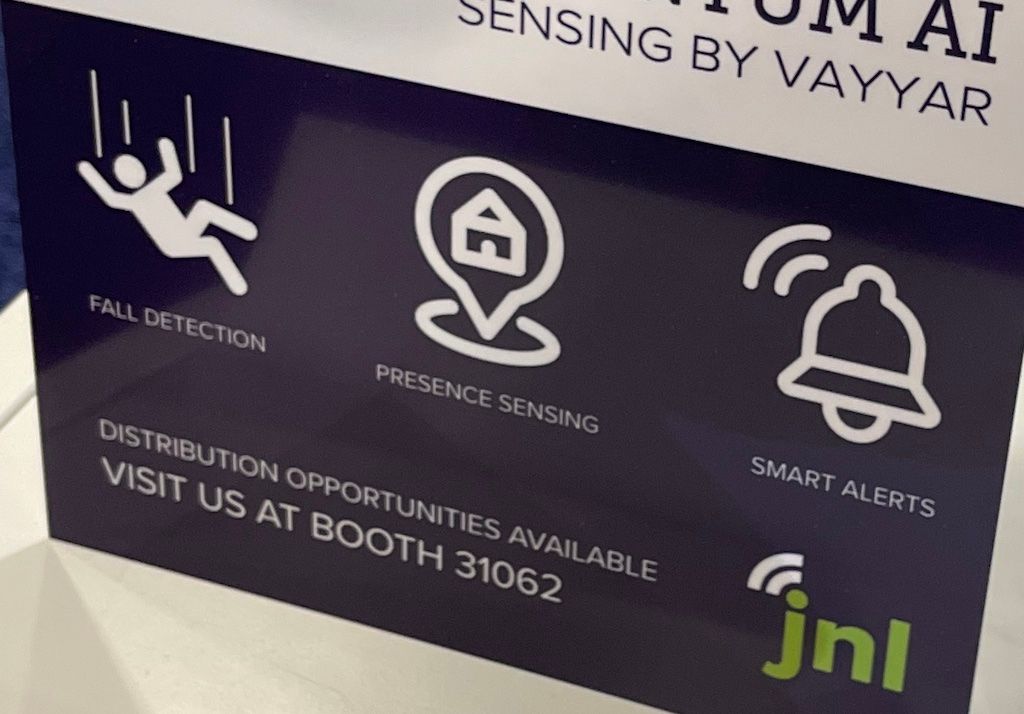
This display for a presence sensing device was OK. It at least highlights some application cases (though "Smart Alerts" is another term that is getting as overused as the #1 Best Only wording). I question the viability of presence sensors in general to deliver on their claims in a reliable and cost-effective fashion, but at least this one does not lead off with grandious claims about detecting the heartbeat of a chipmunk or presence detection in "all conditions".
To summarize, AI/analytics companies are more likely to attract viable customers, with realistic expectations, by focusing on specific use cases, cost savings, and indicators of longevity, integrity, and customer support than they are by recycling the same headlines and terms that have been beaten to death in the last 2 decades of analytics marketing. If your marketing materials are relying on "#1 Best Only First Leading 95%" claims it might be time to re-think things. If you are an end user or integrator looking for an analytics partner, I would make sure you evaluate such claims in depth before making purchasing decisions.